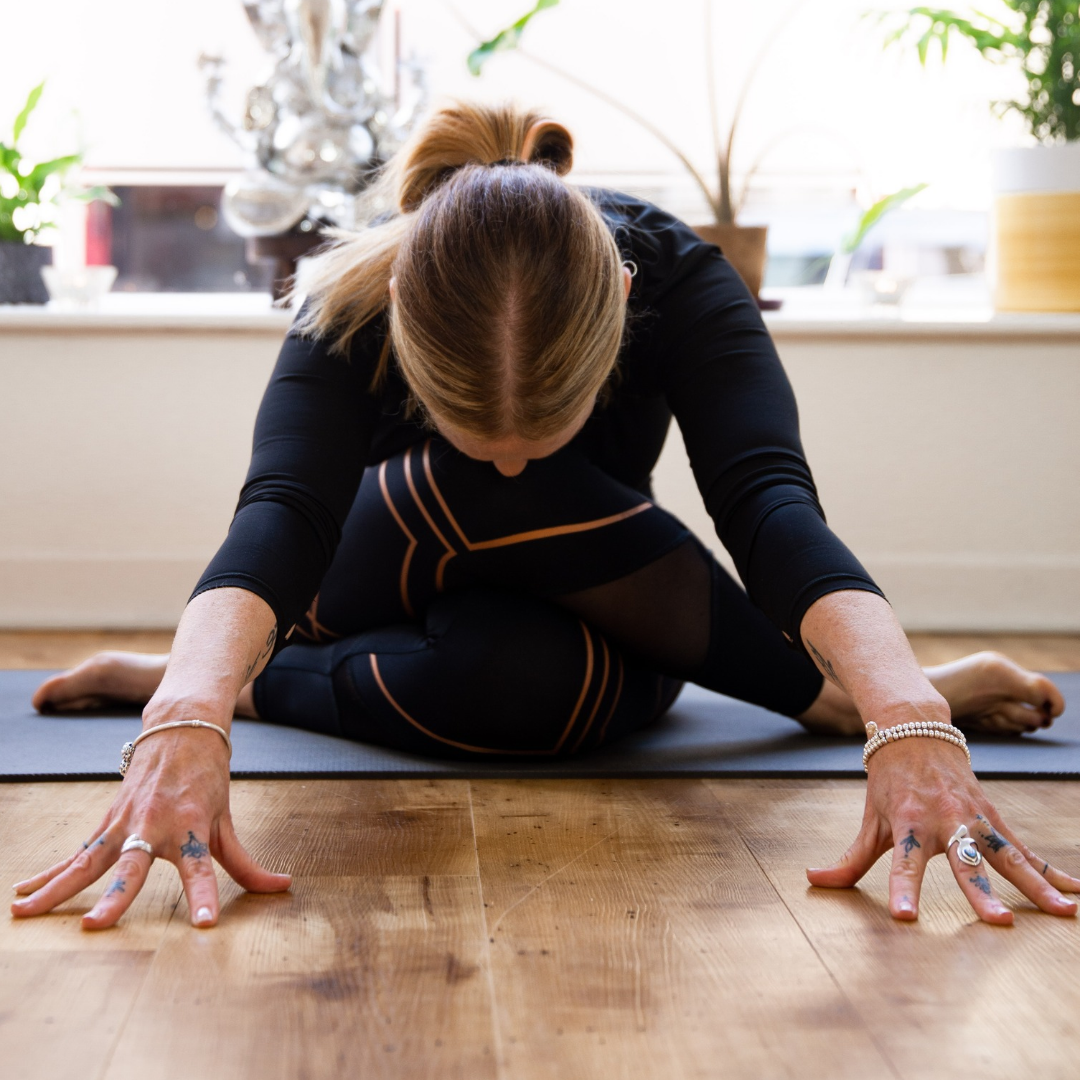
*A tantric exploration of awareness, presence and the living moment *
We spend much of our lives inside the movement of the mind. Thinking, planning, remembering, anticipating, making sense of what has happened and imagining what might come next. Even when we pause, the mind often continues its quiet work, turning experience over and searching for something more.
Yet beneath this movement, there is another possibility. Not a state we need to achieve, nor a perfect stillness we must somehow maintain but a way of meeting life that asks a little less of our thinking mind and a little more of our attention.
What might we discover if, for a moment, we allowed ourselves simply to be here?
Beyond the movement of the mind
In yoga, we often speak of stilling the fluctuations of the mind. Patanjali's Yoga Sutras describe yoga as chitta vritti nirodha - the settling or cessation of the movements of consciousness. It is a familiar teaching, but one that can easily become another task to accomplish: quiet the mind, stop the thoughts, find the stillness.
Of course, the mind thinks. It is its nature to make connections, interpret experience and anticipate what lies ahead. Trying to force it into silence can become another form of struggle, another thing we believe we must get right. Perhaps the invitation therefore, is not to fight the movement but to change our relationship with it.
We can begin to notice a thought without following it, to recognise a familiar story without needing to inhabit it, or to feel the impulse to reach for an answer without immediately acting upon it. The mind continues its work but our awareness begins to widen beyond its activity and in that widening, something shifts.
We discover that we are not required to follow every thought to its conclusion. Not every question needs an immediate answer. Not every feeling needs to be explained before it can be felt. There is space to experience life before we begin to organise it into meaning.
A tantric understanding of presence
Tantric traditions offer a rich exploration of consciousness as something intimately woven into the fabric of existence. Rather than treating the everyday world as an obstacle to spiritual awakening, many non-dual tantric teachings invite us to recognise awareness within the fullness of our lived experience. This changes the nature of our yoga practice.
Presence is not something reserved for meditation, when the room is quiet and the body is still. It can be discovered in the warmth of sunlight against the skin, in the rhythm of our breathing, in the sound of rain, or in the moment we become aware of our feet touching the earth. The ordinary world becomes an invitation to pay attention.
In this sense, the space between thoughts is not necessarily an empty interval that we must seek out. It is a glimpse of the openness that becomes available when we are no longer entirely absorbed in the stories we tell ourselves about what is happening and we begin to meet experience more directly.
And perhaps this is one of the quiet gifts of yoga: not simply helping us feel calmer, but allowing us to participate more fully in the life we are already living.
Making room for what is here
There is a subtle connection between presence and the yogic principle of aparigraha, non-grasping.
When we loosen our hold on how things should be, we create room for what is actually here. We become a little less invested in controlling the next moment, securing a particular feeling or finding the perfect explanation for our experience.
This doesn't mean abandoning discernment (viveka) or becoming passive. It means recognising the difference between responding to life and continually trying to negotiate with it. Sometimes, presence asks us to act. Sometimes it asks us to rest. Sometimes it invites us to listen more carefully, especially when our first instinct is to defend, explain or rush towards a resolution.
The practice is not about becoming detached from our lives, it's about becoming available to them.
And that availability can begin in the smallest of moments: one conscious breath before replying, a pause before reaching for our phone, or the willingness to sit with uncertainty without immediately trying to make it disappear. These moments may seem insignificant but they do offer us another way of being.
A moment to practise
The next time you find yourself with a few quiet minutes, allow yourself to settle without needing to achieve anything.
Feel the natural movement of your breath. Notice the points of contact between your body and the ground beneath you. Allow sounds to arrive and fade without needing to identify or interpret them.
When thoughts arise, let them be there. You don't need to push them away or follow them. Simply notice that thinking is happening and gently return your attention to the immediacy of your experience.
Perhaps you notice a sensation in your hands, the rise and fall of your chest, or the space surrounding you.
Rest here for a few breaths.
There is no need to manufacture a particular feeling or search for a moment of perfect silence. If the mind remains busy, that too can be met with patience.
The practice is simply to return, again and again, to the experience of being here.
The fullness of this moment
We can spend so much of our lives waiting for the next thing: the answer, the resolution, the opportunity to begin again. We imagine that peace will arrive when everything falls into place, when the uncertainty has passed or when we finally understand what we are meant to do. But life is happening now, in the midst of all that remains unfinished.
Perhaps the space between thoughts offers us a glimpse of this simple truth. We do not have to resolve every question before we can inhabit our lives. We do not have to become someone different before we can meet ourselves with attention and care.
There is a quiet richness in allowing the moment to be what it is, without immediately asking it to become something else.
And sometimes, when we stop reaching beyond the present for just long enough, we discover that there is more here than we have realised.